
Keep herdr, give each agent its own microVM
Brig now supports herdr. The herdr profile runs each coding agent in its own Brig microVM and lets one herdr client manage all of them over SSH, with no open port in the guest. A new herdr plugin, herdr-brig, turns the setup into one key: it boots a sandbox for a project, registers it as a herdr machine, and starts Claude Code in it. Another key removes it. This post covers what shipped, how to set it up, and its limitations.
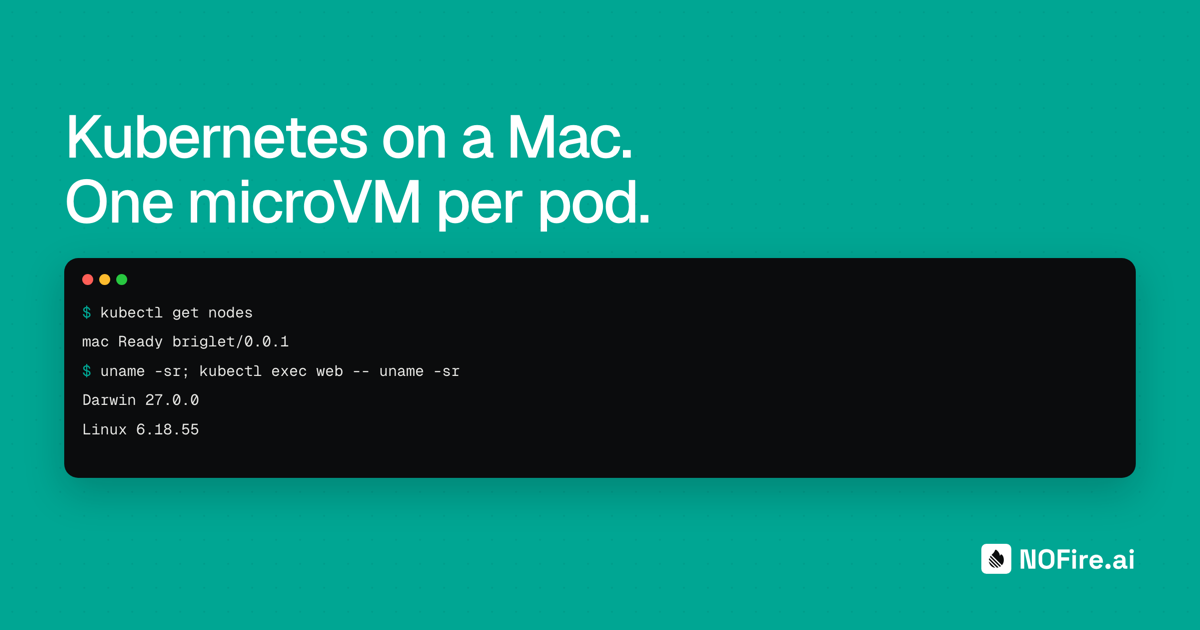
Kubernetes on a Mac, one microVM per pod
Briglet runs the Kubernetes control plane and a node agent as macOS processes on Apple silicon, and boots every pod as its own Linux microVM. This post installs it on a clean Mac, follows a pod into its VM, routes a Service without kube-proxy, and reads the conformance results.
Agent evals: measuring the noise before comparing agents
In our previous post we replaced a team of agents with one agent loop. It diagnosed 1.5x as many faults without the Kubernetes tools, at 60% less cost. But there is a problem with evaluating agents. Running the same system twice can give very different results, and in our runs the same build, run twice, moved between 0.65x and 1.38x. So how much of the gain was real and how much was noise? That is what we set out to measure.
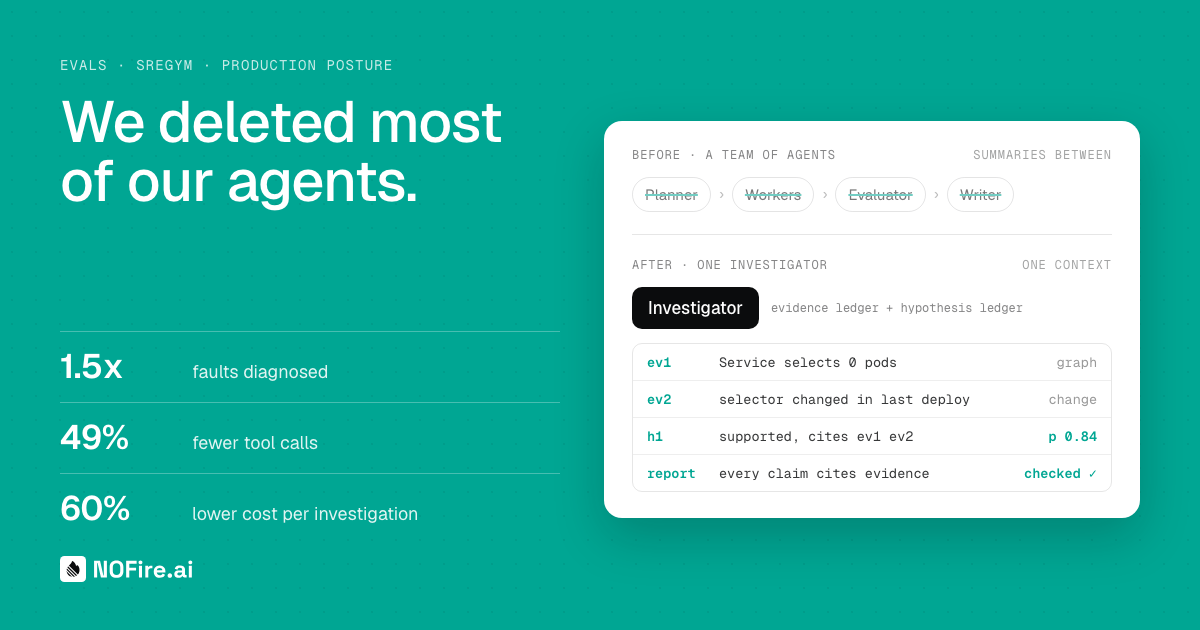
We deleted most of our agents. Our evals told us to.
Earlier this year, we ran NOFire’s root cause investigations on a multi-agent architecture. Daily evals against SREGym and our own test cases showed us what actually improved diagnostic accuracy. A single agent loop delivered the best results: it diagnosed 50% more faults with 49% fewer tool calls, cut the cost per investigation by 60%, and reached a diagnosis 2.5× faster.
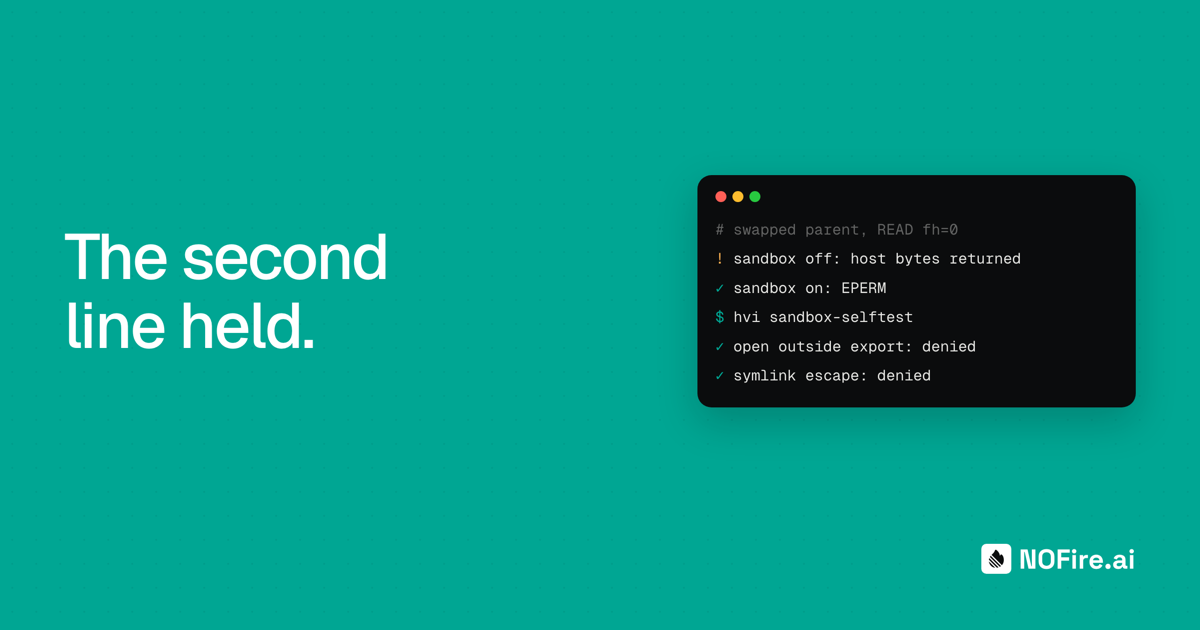
Defense in depth in a microVMM: the virtio-fs path bug our sandbox caught
Docker's macOS VMM lost the host filesystem to a virtio-fs path re-resolution bug (CVE-2026-77179). We replayed the sequence against hvi, our own microVMM. Its handle-based write path held, but one stateless read path exposed the same primitive. The deny-default Seatbelt profile stopped it before the host file could be opened. This post explains the FUSE state involved, the residual exposure, and the descriptor-relative fix.
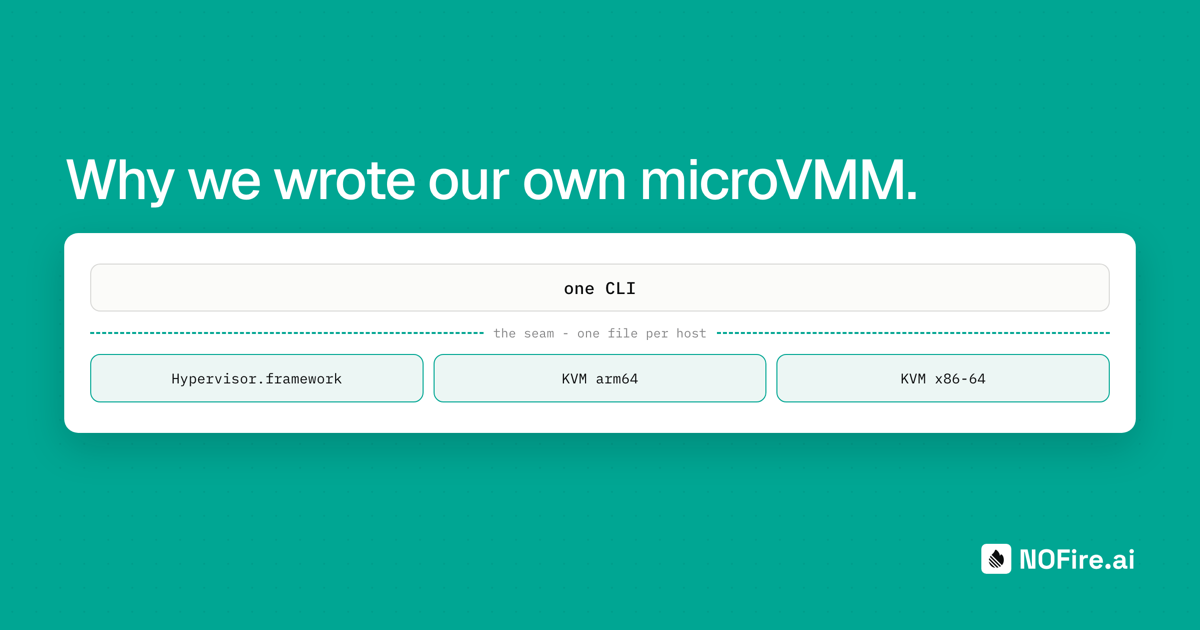
Why we wrote our own microVMM
Our agent sandbox must behave consistently on macOS laptops and Linux servers. Porting Firecracker would require a long-lived fork, so we built a small VMM around an explicit hypervisor interface. This post describes the implementation cost, the components we reused and the work that remains.
Tight enough to move fast. Deep enough to matter.
A tight, multidisciplinary, fully distributed team spanning a thirty year range in age and experience: systems researchers, software engineers, and production veterans built into a lean execution and research machine, not a headcount to grow past.

VM isolation at container speed: urunc and the Kubernetes agent-sandbox CRD
Integration of urunc with Kubernetes agent sandbox CRD for VM-based isolation and fast spawn times for AI agent workloads sandboxing
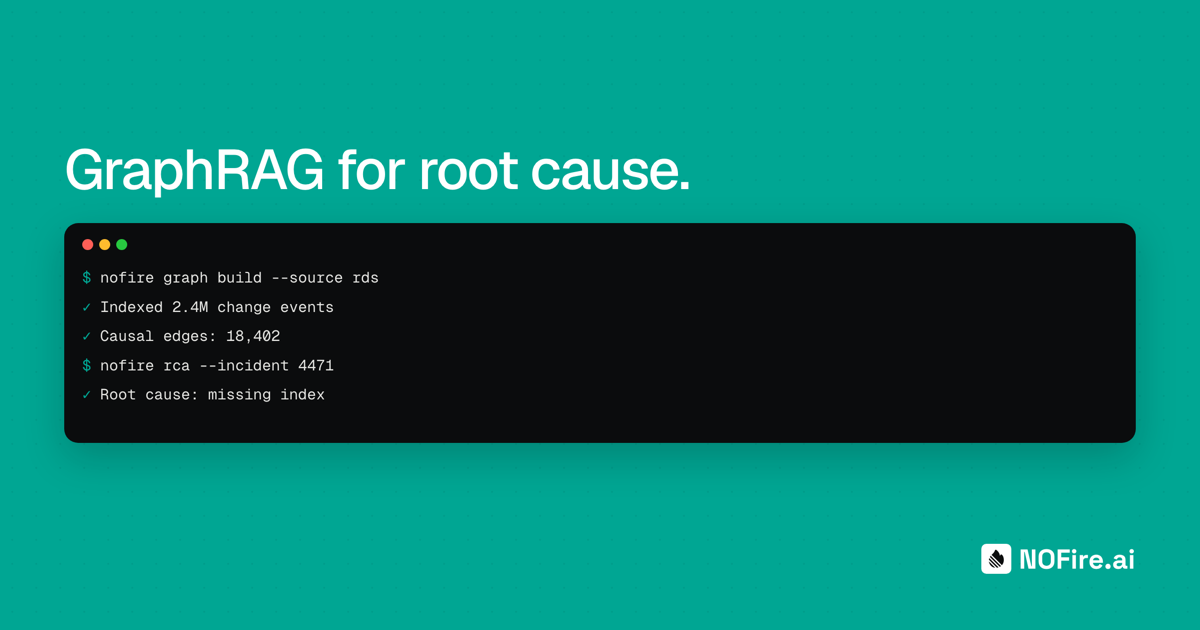
How we built a production-ready GraphRAG for RCA using AWS RDS
Production-grade root cause analysis and change management intelligence with an AWS-native graph engine